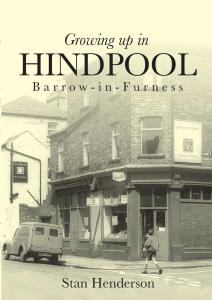
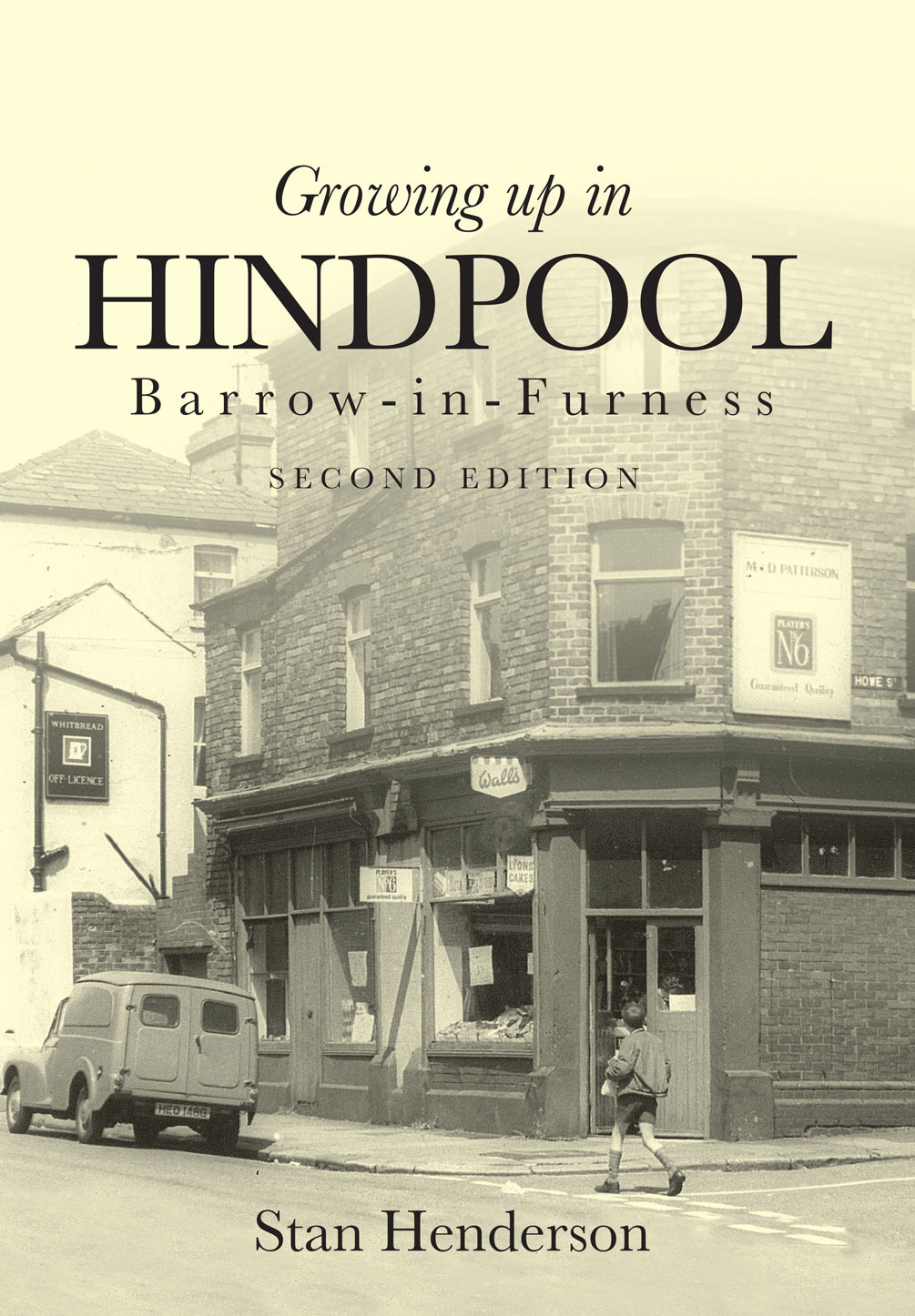
Growing up in Hindpool
Barrow-in-Furness
The history of Hindpool has been likened to a patchwork quilt, with each fragment, or patch, different in time, size, shape and colour. The author weaves his quilt with the thread of family history and personal experience in his book. The story starts with the arrival in Barrow of the writer’s ancestors, immigrants from Shropshire, who had come to work on the blast furnaces of the local monster Ironworks. These works would later hold an unexplained fascination for the author, who, in this book, takes the reader on a conducted tour around the historic works.
All buildings and places mentioned in the narrative have had some significance in the author’s life at Hindpool. They have been written about with great enthusiasm and sentiment.



Overview & Preview
Contains lots of colour and B&W photos, maps and illustrations
140 Pages
This story is about friends, families, and characters growing up in Barrow-in-Furness.
As with previous books, it has been culled chiefly from family history. The narrative’s setting is Hindpool, initially in the parish of Dalton-in-Furness. “Hynepulle”, as it was known to the monks of Furness, was first mentioned in the Dalton court rolls of 1537.
The district, during my recall, was divided into Upper and Lower. This was not because of any class distinction aspect. Hindpool is bisected by the main thoroughfare, Duke Street, which effectively splits it in two. Moreover, during the early days of Barrow’s development, Lower Hindpool was populated by, mainly, migrant workers – which included my ancestors – the Stocktons. This book is my attempt to recount at least part of the history.
Published in 2019 by Stan Henderson
Second Edition updated in 2024
© Copyright Stan Henderson
ISBN: 9781916021747
Hindpool
Hindpool was the location of the once mighty Haematite Steel Company (incorporated in 1864), which, in two separate centuries, was at the forefront of steelmaking technology.
The works were, originally, erected to stand or fall by the manufacturing of steel ingots via the new Bessemer process and the rolling of said ingots into rails, on a scale hitherto never before contemplated. It was a bold experiment.
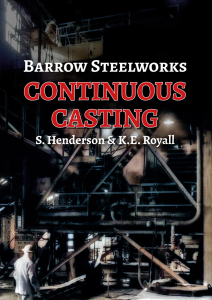
Many years later, during the 1950s, the aforementioned ingots would be tossed onto the proverbial scrap heap when Barrow Works developed a highspeed process for the continuous casting of steel billets and slabs. This new process consigned several steps of orthodox steelmaking to the history books.
Although not originally conceived in Barrow, the continuous casting of steel, in twenty years, had not advanced beyond the experimental stage.
What Barrow achieved – during six years of intense development work, when the alchemy was lighted upon – was to progress the concept into a commercially viable process; again making history.
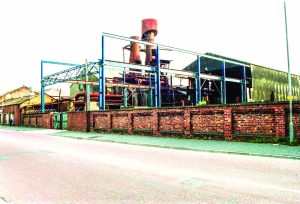
Cairds Foundry
☆ ☆ ☆ ☆ ☆
This is the second book I have read regards the author Stan Henderson he has an excellent knack of producing very enjoyable short stories, he should produce more I think he would be very successful.
☆ ☆ ☆ ☆ ☆
Enjoyable read!
☆ ☆ ☆ ☆ ☆
I liked all of the book. I was born and grew up in hindpool so was very close to my heart.
Other books by Stan Henderson you might like